
“The Seven Secrets of highly successful Bodyworkers”

Read more

“The Seven Secrets of highly successful Bodyworkers” New article by Meghan Mari and Rachel Fairweather

(with acknowledgements to Steven Covey for his inspirational book: The Seven habits of Highly successful people)

What makes a really GREAT bodyworker?

During my fifteen year love affair with bodywork I have practised, taught, studied and received massage in many diverse parts of the world including the UK, USA, Europe and Thailand. I have known bodyworkers from many different disciplines and walks of life, from the extreme ends of the “New Age” to the resolutely scientific. I have experienced people working with muscles, bones, auras, Qi, cranial rhythms, Sen lines, meridian lines, manipulating organs, fascia, using movement and stillness. I have seen healing happen through working on the body, off the body and in the deepest layers of the body.

From all of this it has become apparent to me that some bodyworkers “make it” – they are successful, happy, have the practice they desire, feel like they are travelling their life path, and are financially content in whatever way that means to them. Others never quite seem to get there, their practises don’t flourish, clients don’t come back to them, they are scraping a living emotionally and financially.

So what is the difference? What makes a truly great bodyworker? It seems no single quality alone will suffice. I have seen highly gifted and intuitive therapists burn out rapidly as they become overwhelmed with the practicalities of running a business. I have seen therapists who are successful business people and know their anatomy inside and out but who have no sensitivity of touch or ability to relate to clients.

This article attempts to distill the essence of some of those qualities I have observed in the therapists who are living and loving their life and work to the full – the Seven Secrets of Highly Successful Bodyworkers.

Secret One: Enthusiasm

“Nothing great was ever achieved without enthusiasm” Emerson

“Nothing is so contagious as enthusiasm; it moves stones, it charms brutes. Enthusiasm is the genius of sincerity and truth accomplishes no victories without it” Bulwer-Lytton

Great bodyworkers LOVE what they do. They are excited, animated and energised by their work. They love to talk about it, read about it, let others know how great bodywork is. And their enthusiasm doesn’t just stop at the bodywork; they are energetic about all aspects of their practice; how they can make their clinic room the most restful and appealing to their clients, how they can design a great business card or leaflet, how they can find the best clinic or colleagues to work with. Enthusiasm is contagious, your clients want to know that you believe in what you do, they want a piece of what makes you buzz. If you are bored by your work, your clients will know and, lets face it, who wants to be around someone who is jaded .

One of my first teachers said to me “I have to constantly find ways to stop myself getting bored with massage”. That is what good bodyworkers do- they are fascinated by the body, always finding new ways to achieve better results with their clients, looking for new techniques. If you are still doing the same routine you learned five years ago, chances are you will be bored. So if you are jaded with your work, go and get some training, find new ways to work, move, break out of the box. Find a colleague to swap with and learn some new techniques. Read a great bodywork book. Surf the internet for inspiring bodywork sites. Rediscover your passion for your work and watch your practice grow.

Secret Two: Perseverance

“Victory belongs to the most persevering” Napoleon
“ I never did anything worth doing by accident, nor did any of my inventions come by accident, they came by work” Edison
“ If people knew how hard I worked to get my mastery, it wouldn’t seem so wonderful after all” Michelangelo

Like these famous characters, successful bodyworkers know the value of hard work and perseverance. Great therapists “keep on keeping on” when things are not going their way, pick themselves back up after mistakes and failures. No matter how talented you are, building a successful practice takes time, work and perseverance. Don’t expect the phone to just start ringing when you qualify; you need to put in effort and good old fashioned elbow grease to get those clients. Remember the old adage “If you love what you do you’ll never work another day in your life”. So love your vocation, work hard at it and enjoy the journey.

Secret Three: Be open to new learning

“As for me all I know is that I know nothing” Socrates
“ To be conscious that you are ignorant is a great step to knowledge” Disraeli

The fascinating paradox is that great bodyworkers “know their stuff” yet at the same time are comfortable with “not knowing” and are always striving to learn more. Taoist sages claim that “one who does not know actually knows, and one who knows really does not know”. To be empty, to recognize how little we know is to be abundant. Successful bodyworkers are always open to new learning, and recognise we are always beginners with so much to learn. There is a wonderful story in the book “ Beyond Shiatsu” by the inspirational bodyworker and teacher Ohashi as follows

“In the 1970s I gave some sessions to the late prima ballerina Margot Fonteyn. After one of them she said she was attending ballet classes for beginners. I asked her “ Why are you- a famous, top ballerina- taking a beginners basic course with 18 year old kids. She said “If I don’t take this class every day, I can tell it in my performance; and if I don’t take this class for 2 days my choreographer can tell and if I don’t take it for 3 days, an experienced audience can tell”. This is the essence of mastery – to always be open to new learning, to seek out inspirational teachers and mentors, to use their experience to give you shortcuts to the success you desire.

Secret Four: Great Touch

“ Good bodywork is 90% perception and 10% technique: (Christophe Somer; Rolfer)

Successful bodyworkers have great touch. Their work has focus, sensitivity and connection. The term “listening touch” coined by Rollin Becker describes this perfectly. Good listening touch is different than knowing lots of techniques- skills are important but if they are carried out with lack of focus and feeling, your work will be ineffective. It doesn’t matter whether you are doing sports massage, relaxation massage, aromatherapy, shiatsu, craniosacral work or Thai massage, the therapists who get good results and retain clients have great touch. This doesn’t mean they were just born with it: like everything else, good touch and sensitivity comes from application, focus and experience. Good teachers will teach you not just technique but how to touch – how it feels to palpate a tight muscle, restricted fascia, stagnant energy or the gentle tide of the cranial rhythm. Receiving bodywork yourself will teach you what feels good and what doesn’t. Cultivate your sense of touch by being fascinated by the body and its hidden rhythms and find yourself a good teacher whose touch thrills your senses.

Secret Five: Outcome orientated treatments

Successful bodyworkers are focussed on the outcome of their treatments not just what style or techniques they offer. If a client wants to relax, a good therapist doesn’t just launch into the same old tired routine but digs into their toolbox of techniques and finds what they can use to make this unique individual relax. This may well be entirely different from what will be needed to enable the next client to achieve deep relaxation. At Jing, our medical massage courses look at how to reduce pain within 1-6 treatments from a combination of advanced techniques including trigger point, myofascial release and stretching. Being outcome orientated builds practices and retains clients as they know exactly what they can expect to achieve from the treatment or series of treatments. Being outcome orientated also relies on good consultation and assessment skills so you know what your client needs and expects.

Secret Six: Graceful Body mechanics

“ The energy is rooted in the feet, developed in the legs, directed by the waist and expressed trhough the fingers” (Tai Chi classics)

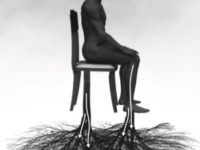
You can spot a good bodyworker a mile away from the grace and ease of their bodies when they work. They are focussed and at one with their work. Just watching them makes you feel relaxed. At Jing, we place primary importance on teaching our students great body mechanics. You will learn to move with ease and fluidity and to avoid techniques that place strain on hands, necks, backs and wrists. Learn the dance of massage, moving according to the principles of Tai Chi, using breath and energy and from a firm rooted foundation.

Good bodyworkers also understand that “less is more” and use graceful body mechanics to move from a position of ease:

“ Over and over again people come to me and they tell me, you just don’t know how strong I am. They say “strength” and I want to hear “balance”. The strength idea has effort in it; this is not what I am looking for. Strength that has effort in it is not what you need; you need the strength that is the result of ease” (Ida Rolf, founder of Rolfing)

Secret Seven: Know your worth

Successful therapists know their worth and charge appropriately for what they do. They understand that money is just a unit of energy and that if you are not charging appropriately for what you do, this is a quick route to exhaustion and resentment. Good bodyworkers are able to feel confident about re-booking clients as their treatments are professional, appropriate and outcome oriented.

About Jing

The Jing Institute of Advanced Massage Training is an organisation dedicated to excellence in all aspects of postgraduate massage training. Based in Brighton, we offer courses around the country. Our courses include longer qualifications in advanced massage including our revolutionary BTEC Level 6 (degree level) in Advanced Clinical and Sports massage and 1-2 day CPD courses in Hot Stone Fusion, trigger point, myofascial release, stretching, pregnancy, on site, living anatomy and many others. Please call or check our website for further information and course dates.
www.jingmassage.com
info@jingmassage.com
Tel: 01273 628942

Copyright Jing Institute of Advanced Massage . Text Rachel Fairweather. Photos Meghan Mari

Having Fun with Fascial Fusion: Choice Health and wellbeing article

Read more

Having fun with Fascial Fusion creative fascial techniques that get results

As Myofascial Release and working with fascia becomes ever more popular in the UK, the inevitable question arises “Which are the best and most effective fascial techniques to learn?” The question reminds me of the old adage: Patient: “Doctor, doctor what are the best exercises to do?” Doctor: “The ones that you do!”

In this little snippet lies a fundamental truth –the techniques that are likely to be the most successful are “the ones that you do” i.e.:
those skills that you learn well, use in your practice, and feel passionate about. My own preference is an eclectic Fascial Fusion where I blend different fascial techniques to gain the best result; adapting the technique and the approach for the client and their pain situation. This keeps my bodywork fresh, fun and creative – one of my very first massage teachers said to me many years ago “I have to constantly find ways to not let myself get bored with massage”. I feel that this is so true – as bodyworkers we need to make sure we don’t get into a rut; to keep our bodywork alive by experimenting with different approaches, having fun with the body, constantly seeing what works and what doesn’t work, blending and improvising, using technique, anatomy and intuition in equal doses.

I often quote to my students the great saying “One who works with the hands is a labourer; one who works with the hands and the head is a craftsman; one who works with the hands and the head and the heart is an artist” (St Francis of Assisi). This pretty much sums up my approach to bodywork in general; massage and bodywork are to me always an art, something that touches and brings out one’s fundamental creativity. With fascial work, all the different fascial approaches have their own strengths and a combination can be incredibly powerful, that great fusion of “the hands, the head and the heart”

Overview of different fascial approaches:

In my clinic I have successfully used fascial techniques to treat pain issues such as low back pain, sciatica, carpal tunnel syndrome, RSI, sporting injuries, rotator cuff problems, fibromyalgia and ME, pelvic and menstrual problems, IBS, and headaches. Including fascial work into your existing bodywork ‘toolbox’ will without a doubt enable you to get results more quickly and easily.

There are many techniques that primarily focus on the fascia. Techniques are often referred to as ‘direct’ or ‘indirect’.

In the direct method we have a clear concept of where we want the tissue to go to produce a certain effect. This is used in Rolfing and SI (Structural Integration) techniques where we wish to produce optimal alignment in the body.

Indirect release is the term applied to releases in which the practitioner follows the direction of ease in the client’s tissues rather than working
directly on the restriction first. This is similar to releasing a stuck drawer by pushing it in first.

MFR, cranial and visceral work use this approach
(although not exclusively). Some of the most well-known fascial approaches
Rolfing or SI as developed by Ida Rolf in the 1960s. Rolfing seeks to re-establish proper vertical alignment in the body by manipulating the myofascial tissue so that the fascia elongates and glides rather than shortens and adheres. SI work aims to literally change the shape of the body into more optimal alignment thereby easing pain and dysfunction caused by fascial restrictions. SI work typically takes the body through a series of sessions – 10 in the original ‘Rolfing recipe’; starting at the feet and working the way up the body to achieve balance and ease. SI
approaches incorporate:

☯ Systematic ‘body reading’ to identify imbalances;
☯ A series of deep direct fascial techniques that incorporate work with fists, fingers, forearms together with active movement by the client. This
follows one of Ida Rolf’s great dictums ‘Put it where it belongs and call for movement.’

Other Structural Integration Approaches

Other SI approaches include KMI (Kinesis Movement Integration) as developed by Tom Myers; Hellerwork (includes dialoguing and emotional work) and many others. All of these approaches are based heavily on Rolf’s original work and retain most of her original concepts and techniques. For example, KMI uses 12 sessions rather than 10 to incorporate Tom Myers new ideas around the way fascia links together (Anatomy Trains). However, the techniques are broadly identical to those used by Rolfers and SI practitioners from different schools share more similarities than differences in the way they work.

Myofascial Release (MFR): originally coined by the osteopath Robert Ward, in the 1980s the term MFR was adopted by a physical therapist John Barnes to describe his method of freeing restrictions in the myofascial system. The overall intention of MFR is to relieve pain, resolve structural dysfunction, restore function and mobility and release emotional trauma. MFR techniques rely heavily on the ability of the practitioner to use the ‘listening touch’; tune into the tissues and follow the fascia to where restrictions are held. Techniques taught in this approach usually include cross hand stretches, arm and leg pulls and many others. Some of the techniques taught have a cross over with those from craniosacral therapy (i.e.: transverse fascial plane releases) or in some cases more direct
approaches. Both MFR and structural integration approaches focus mainly on the myofascia – the fascia running through and around the muscles (‘myo’). An all-round fascial practitioner would also be proficient at techniques that seek to identify and release deeper fascial restrictions:

Visceral Manipulation: developed by the visionary French osteopath Jean-Pierre Barrall, sees restrictions in the viscera (organs) as primary to other types of pain including musculo skeletal restrictions. Through tuning into the fascial restrictions around the organs with a sophisticated sense of ‘listening touch’, excellent results can be gained.

Craniosacral Therapy: Works on the deepest layers of the fascia: the dura mater surrounding the brain and spinal cord. William Sutherland was the osteopath who pioneered this approach to healing by recognising the potential of the cranial bones to move; John Upledger has popularised craniosacral therapy in the last few decades.

Combining different approaches – the creative principles of Fascial Fusion

So how can we start to combine all these different approaches into our treatments for optimal results? Here are a few simple principles to get you on your way:

1. Don’t be afraid to use more than one system of assessment: All the different systems have different ways of assessing where the fascial tissues are restricted. Structural integration approaches use body reading, MFR uses a more simplified form of body reading together with sensitivity of listening touch to tune into restrictions. Visceral work uses a sophisticated tool of ‘general listening’ – a hand placed lightly on the top of the head to tune into general restrictions – this is then fine-tuned
through various ‘local listening’ techniques. Cranial work uses ‘arcing’ techniques to tune into
primary restrictions. I find that using a combination of assessment techniques helps me
to develop my skills in being able to tune into where the major fascial restrictions can be found.

All of the above assessment techniques can be easily and efficiently integrated into your initial
consultation.

2. Think of techniques as ‘templates’ rather than ‘absolute’. When you are first learning it is natural to get lost in the absolute detail of how to do a particular technique, i.e.: how many times
do I do that stroke; how exactly do I hold the arm on an arm pull. As you become more proficient
you realise that techniques are actually only ‘templates’ that can be played with – the dictionary defines a template as ‘something that serves as a master or pattern from which other similar things can be made’. So it is with techniques; you can adapt all you fascial skills to
integrate ideas from all the different approaches.

3. The supremacy of ‘listening touch’. I find that whatever fascial techniques you are using can all be enhanced by improving your sense of listening touch – the ability to tune into the tissues and sense where restrictions are and when you get a release.

4. Combine the best ideas from different approaches: Once you are familiar with different styles of fascial work, experiment with combining the best ideas. For example, why not combine the idea of active client movement used in SI with a cross hand stretch? Or use the bodyreading principles to see if there has been a change in client alignment through cranial or visceral work?

5. If one fascial technique doesn’t work use a different one: Sounds obvious but different techniques may be more or less effective depending on the tissue and the situation. If your cross hand stretch isn’t working to release stuck fascia in the low back, try some direct structural integration techniques. If that doesn’t work maybe you need to use a cranial technique to release the dural tube.

I hope this has given you some ideas and confidence to play with integration of different fascial approaches. Fascia work is fun, fun, fun and gets astounding results. Keep your work fresh and exciting and you will always have clients coming back for more.

© Rachel Fairweather is co-founder and director of the Jing Institute of
Advanced Massage. Based in Brighton, London and Edinburgh the Jing
Institute runs a variety of courses in advanced techniques to help you build
the career you desire. Our 9-day comprehensive fascial training (taken in 3
separate modules) is unique in offering hands on skills in all the major
approaches described above. For the therapist who wants to be the best they
can possibly be, we offer a BTEC level 6 (degree level) in advanced clinical and
sports massage – the highest level of massage training in the UK.
Please call or check our website for further information and course dates.
www.jingmassage.com info@jingmassage.com Tel: 01273 628942

CAM Expo Press Release 2011

Read more

PRESS RELEASE
Issued: 25 October 2011
For Immediate Release

camexpo reports successful 2011 show!

The ninth edition of the UK’s only dedicated professional CAM show – camexpo – has been a huge success, with both exhibitors and visitors reporting a very productive and vibrant event.  Organised by Diversified Business Communications UK, camexpo attracted a total of 5333 attendees over 22-23 October at Earls Court, London, and was praised yet again for the quality of its visitors, its Keynote speakers, and the wide choice of CAM products and services on offer.

Zoe Campbell, event manager of camexpo, is delighted by the overwhelmingly positive feedback received so far:  “I would like to say a huge thank you to all of our exhibitors, visitors, speakers, and supporters, for making this year’s camexpo the most successful, inspiring and educational event yet!”

Despite severe disruptions on the tube lines serving Earls Court over the weekend, thousands of dedicated practitioners, therapists, CAM students and health store buyers flocked to the show.  Attendees benefited from incredible ‘show only’ savings on thousands of essential CAM purchases, plus an unrivalled opportunity to be kept up-to-date with all the latest research and developments by big name industry speakers and trainers in the show’s 22 free Keynote seminars (sponsored by The Nutri Centre), 34 free demos, and 48 Taster Workshops (sponsored by Balens).  With the show floor buzzing with business throughout the two days, this year’s show also saw an increased social media presence, with thousands of Twitter and facebook followers able to share in the show’s activities via live updates and photos from camexpo’s exhibitors and attendees.

Firmly established at the forefront of the CAM profession, the success of the show has been reflected in the fantastic re-booking rate for next year – with around 65% of the 190 exhibiting companies demonstrating their continued support for camexpo by booking stand space for 2012, which marks the tenth anniversary of the event.  Highly satisfied exhibitors included Jonathan Orchard, director of Lyposphericnutrients.com, who commented: “camexpo was our first trade show and proved to be way beyond our expectations in terms of overall value.  Speaking face to face with so many practitioners, clinic/shop owners, buyers and even some of our own existing customers was fantastic. We also made contact with several key journalists.  We will be back again next year for sure.”

Exhibitor Sam Tucker, web marketer at NES Health, was equally upbeat:  “This is the 4th year that NES Health has exhibited at camexpo.  It is always an excellent show for us and this year was no exception.  camexpo was filled with excited practitioners all eager to try out our new NES miHealth healthcare device. With non-stop demonstrations this was a phenomenal launch weekend for us!”

“Busy show, it’s unbelievable, if there is a recession it’s not in here.  Level of interest is really amazing and we have been busy the whole time,” says Sarah Daly, sales manager at A.Vogel.

“Excellent show, we met the key people we needed to see and some fantastic buyers we did not expect,” says Adeniyi Okinikan, UK distributor of Grander Water.

“This is our first camexpo.  It has been brilliant!  Lots of visitors to our stand – amazed at how busy we have been,” says Gillian Edwards, chairman of The Association of Registered Colon Hydrotherapists (ARCH).

“The show experience has been amazing – great new connections, very vibrant and excellent for business,” says Paul Kensett, course director of The Smart School.

Hundreds of surveyed visitors also sang the show’s praises.  “camexpo is fantastic!  I find it very informative and also a great place to source lots of products in one place.  Everything I am looking for is here,” says massage therapist Judith Ravelo Alvarez.

“Fantastic seminars – full of up-to-date research results, advice and information,” says Sarah Veale, trainee reflexologist at Tranquil Moods.

Show highlights included the recipients of camexpo’s third annual, industry-voted CAM Outstanding Achievement Award were also a popular choice.  With the winners Meghan Mari and Rachel Fairweather, directors and co-founders of the Jing Institute of Advanced Massage Training, enjoying a standing ovation as they accepted the honour from last year’s winner, complementary therapist, tutor and author, Mary Atkinson.  Aside from winning an overwhelming majority of votes, many of Meghan Mari and Rachel Fairweather’s legion of followers submitted glowing testimonials on their behalf, including the following by one anonymous supporter:

“Their aim was to start a revolution in massage therapy in the UK and provide the type of advanced massage training available in other countries such as the USA.  In 2003, they ran three short weekend workshops in the cutting edge techniques that had helped make their own practices successful.  The feedback was phenomenal and students started to build their own successful practices using their proven protocols incorporating trigger point therapy, myofascial release, advanced stretching and hot stone massage.  Their rallying cry of “join the revolution” spread and they started growing a passionate, dedicated community of students and teachers who wanted to make a difference.”

“We are thrilled and honoured to be this year’s recipients of the CAM outstanding achievement award,” commented Mari and Fairweather earlier today.  “We are humbled by the incredible outpouring of support of the CAM community.  We feel this award belongs not only to ourselves but also to our amazing teachers, staff and inspiring students who have been with us every step of this wonderful journey.  This award is an important recognition of our collective triumph.  Together, we have raised the standard of professionalism of the UK massage industry. The success of Jing is a testament to the power of positivity, passion, enthusiasm and co-operation in achieving any goal you set your mind to.”

“We would like to thank the camexpo team for all their help and dedication through the years and everyone who has joined the Jing revolution; those we have met and those we have yet to meet.”

camexpo will return to Earls Court, London, on 20-21 October 2012.  For further information, please visit www.camexpo.co.uk, or stay up-to-date with all the latest news and 2012 exhibitor information via the show’s facebook page (http://www.facebook.com/profile.php?id=100001522315531) and twitter account (@camexpo).
CAMEXPO_PR_251011_postshow-2

New brochure

Read more

This is an example PDF download. But a useful one – you can download the new Jing brochure from here!

Click here to download.